
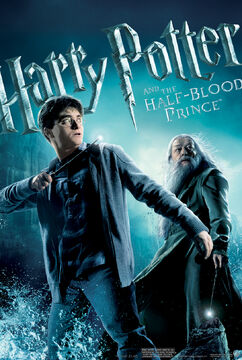
Harry Potter and the Half-Blood Prince is the sixth film in the Harry Potter series and one of the most important chapters in the story of Harry’s battle against Lord Voldemort.
Released in 2009, the movie takes the Wizarding World into increasingly dark territory. Harry is no longer simply a student learning magic at Hogwarts. Voldemort has returned, the wizarding world is beginning to accept the reality of the threat, and the conflict between good and evil is moving toward its inevitable conclusion.
Directed by David Yates and adapted from J.K. Rowling’s sixth novel, Harry Potter and the Half-Blood Prince combines mystery, romance, comedy, tragedy, and some of the most important revelations about Voldemort’s past.
At the center of the story is Harry’s discovery of an old Potions textbook belonging to a mysterious student known only as the Half-Blood Prince. At the same time, Professor Dumbledore begins preparing Harry for the final confrontation with Voldemort by teaching him about the Dark Lord’s history.
The result is a film that looks increasingly like a coming-of-age story on the surface while quietly building toward one of the franchise’s most devastating moments.
What Is Harry Potter and the Half-Blood Prince About?
The movie begins with the Wizarding World under growing pressure.
Voldemort has returned, and his followers are becoming increasingly active. The threat is no longer something that can be dismissed as an old legend.
At Hogwarts, Harry discovers an old Potions textbook filled with handwritten notes, unusual instructions, and clever modifications to standard spells and recipes.
The book belongs to someone who calls himself the “Half-Blood Prince.”
Thanks to the mysterious student’s notes, Harry suddenly becomes exceptionally talented at Potions. His success earns him praise from Professor Horace Slughorn, the new Potions teacher at Hogwarts.
But the textbook contains more than helpful study tips.
It also contains dangerous spells, including Sectumsempra, a curse that Harry eventually uses against Draco Malfoy with horrifying consequences.
While Harry becomes increasingly curious about the Half-Blood Prince, Dumbledore begins showing him memories from Voldemort’s childhood.
These memories are essential because Dumbledore believes that understanding Voldemort’s past is the key to defeating him.
Harry and Dumbledore Investigate Voldemort’s Past
One of the most fascinating aspects of Half-Blood Prince is that Voldemort is not physically present for much of the story.
Instead, the movie explores the person he used to be.
Dumbledore shows Harry memories that reveal Voldemort’s early life as Tom Riddle.
Tom Riddle was an exceptionally intelligent and ambitious child who eventually became one of the most dangerous wizards in history.
The memories show that Riddle was fascinated by immortality and power from an early age.
He was also obsessed with objects that could help him achieve his ambitions.
Dumbledore discovers that Riddle became interested in Horcruxes, objects containing fragments of a wizard’s soul.
This discovery changes everything.
Voldemort did not merely attempt to make himself powerful. He attempted to defeat death itself by splitting his soul.
Dumbledore believes that Voldemort created multiple Horcruxes.
If Harry and Dumbledore can locate and destroy them, Voldemort can eventually be made mortal again.
This becomes the foundation of Harry’s mission for the final part of the series.
The Mystery of the Half-Blood Prince
The Half-Blood Prince mystery gives the movie another layer.
Harry initially treats the textbook as an advantage.
Its handwritten instructions allow him to outperform his classmates and even impress Slughorn.
But Harry eventually becomes concerned about the identity of the person who wrote the notes.
The answer comes late in the movie.
The Half-Blood Prince was Severus Snape.
The revelation is significant because Snape has always been one of the most mysterious characters in the series.
Harry has spent years distrusting him.
Snape has frequently appeared hostile toward Harry, while his relationship with Dumbledore has remained difficult to understand.
Learning that Snape was the Half-Blood Prince adds another layer to his character without immediately explaining everything about his motives.
The title therefore works on several levels.
It refers directly to Snape’s identity, but it also connects to his complicated heritage and the history that shaped him.
Daniel Radcliffe’s Harry Potter
By the sixth movie, Daniel Radcliffe’s performance has changed considerably from the wide-eyed child audiences first met in Philosopher’s Stone.
Harry is now older, more confident, and increasingly aware of the consequences of Voldemort’s return.
Yet the film also allows him to be surprisingly funny.
Some of the movie’s lighter moments revolve around Harry’s growing confidence around girls, his friendship with Ron, and his interactions with Professor Slughorn.
This balance between humor and darkness is one of the movie’s defining characteristics.
Harry understands that a major war is approaching, but he is still a teenager dealing with friendship, attraction, jealousy, and school life.
That contrast makes the later tragedy even more powerful.
Draco Malfoy’s Dark Mission
Draco Malfoy receives considerably more attention in Half-Blood Prince than in many of the previous films.
Voldemort assigns Draco a dangerous mission: he must find a way to kill Albus Dumbledore.
The assignment places enormous pressure on the young wizard.
Draco spends much of the movie isolated and frightened, attempting to repair a mysterious magical object while hiding his activities from teachers and classmates.
Harry becomes convinced that Draco is involved in something dangerous.
His suspicions are correct.
But what makes Draco’s storyline interesting is that he doesn’t appear confident about the task he has been given.
He is terrified.
The movie gradually reveals that Draco is not simply acting as a willing servant of Voldemort. He is a teenager trapped by his family’s allegiance and Voldemort’s threats.
Tom Felton’s performance gives Draco’s storyline much more emotional weight.
The Return of Professor Slughorn
Another major character introduced in the movie is Professor Horace Slughorn.
Slughorn is an unusual Hogwarts teacher.
He enjoys collecting talented and influential students, creating what he calls the “Slug Club.”
He is charming, sociable, and occasionally self-important.
But Slughorn also possesses a crucial piece of information about Voldemort.
Years earlier, Tom Riddle asked Slughorn about Horcruxes.
Slughorn was reluctant to admit what happened because he realized that his conversation with the young Riddle may have helped him understand how to create them.
Dumbledore needs Harry to convince Slughorn to reveal the true memory.
This becomes one of the movie’s most important missions.
The sequence demonstrates that Voldemort’s rise was not simply the result of his own intelligence. Other people unknowingly contributed to his development.
Harry and Ginny
Romance becomes a much larger part of the story in Half-Blood Prince.
Harry gradually develops feelings for Ginny Weasley.
Their relationship is initially subtle, but it eventually becomes one of the film’s central personal storylines.
Ginny has also changed considerably since her first appearance.
She is now a confident young witch and a talented Quidditch player.
Their relationship adds a lighter dimension to Harry’s increasingly dangerous life.
However, not every viewer felt that the romantic storylines worked equally well.
The movie spends significant time exploring Harry and Ginny, Ron and Lavender Brown, and Hermione’s complicated feelings toward Ron.
These scenes provide comic relief, but some critics and fans felt they distracted from the darker central story.
Ron and Lavender
Ron Weasley also finds himself in a romantic relationship.
Lavender Brown becomes intensely interested in Ron, much to Hermione’s frustration.
Their relationship produces some of the movie’s funniest scenes.
Ron enjoys the attention at first, but the relationship eventually becomes awkward and uncomfortable.
Meanwhile, Hermione clearly has feelings for Ron but struggles to express them.
The romantic tension between Ron and Hermione had been building for years, and Half-Blood Prince pushes it closer to a resolution.
The story also demonstrates how complicated teenage relationships can become even while a much larger war is approaching.
The Attack on Hogwarts
Although Hogwarts remains central to the story, the school is no longer the safe place it once seemed.
Voldemort’s influence is spreading.
Death Eaters are finding ways to infiltrate the magical world, and Draco’s mission eventually brings the danger directly into Hogwarts.
The atmosphere of the school becomes increasingly ominous.
The film’s cinematography emphasizes this transformation.
The bright, warm visual style of the early Harry Potter movies has largely disappeared. Hogwarts is now darker, colder, and more isolated.
This visual evolution mirrors Harry’s own journey.
He is growing up, and the magical world is losing some of its innocence.
The Astronomy Tower
The film reaches its most devastating moment at the Astronomy Tower.
Dumbledore and Harry return to Hogwarts after retrieving what they believe is one of Voldemort’s Horcruxes.
But Draco has already allowed Death Eaters to enter the school.
Draco confronts Dumbledore but cannot bring himself to kill him.
Then Snape arrives.
He kills Dumbledore.
Harry watches helplessly as his mentor falls from the tower.
It is one of the most shocking moments in the entire Harry Potter series.
Dumbledore’s death changes the direction of the story completely.
Harry can no longer depend on his mentor to guide him through the final stages of the battle.
From this point forward, Harry, Ron, and Hermione must continue the mission themselves.
Why Did Snape Kill Dumbledore?
At the time of the film’s release, Snape’s actions created enormous debate.
Was Snape really a Death Eater?
Had he betrayed Dumbledore?
Or was there something else happening behind the scenes?
The movie intentionally leaves much of this unanswered.
Dumbledore had trusted Snape, but Harry had never trusted him.
Snape’s decision to kill Dumbledore therefore appears to confirm Harry’s worst suspicions.
However, the complete explanation is not revealed until Harry Potter and the Deathly Hallows.
That delayed revelation is one of the most important examples of long-term storytelling in the franchise.
The Cave Sequence
One of the film’s most visually impressive sequences occurs when Harry and Dumbledore travel to a remote cave.
Dumbledore believes that Voldemort hid a Horcrux there.
The cave is dark, isolated, and filled with magical dangers.
To retrieve the Horcrux, Dumbledore must drink a potion that causes intense suffering.
Harry is forced to watch as his mentor becomes increasingly weak.
The sequence demonstrates the extent of Dumbledore’s commitment to destroying Voldemort.
It also reinforces one of the film’s central themes: defeating Voldemort will require sacrifice.
The Visual Style
David Yates gives Half-Blood Prince a noticeably darker visual identity.
The cinematography by Bruno Delbonnel emphasizes shadows, muted environments, and atmospheric lighting.
Hogwarts often feels almost gothic.
The result is a film that looks very different from Philosopher’s Stone.
That visual evolution reflects the progression of the story.
The Harry Potter movies began as children’s fantasy adventures. By the sixth installment, the series has become a dark fantasy epic.
Death, war, political instability, and moral ambiguity are now central to the story.
The Themes of the Movie
At its heart, Half-Blood Prince is a story about death.
Voldemort is obsessed with avoiding death.
Dumbledore understands that death cannot be avoided forever.
Harry must eventually learn to confront it rather than simply fear it.
The movie also explores the dangers of obsession.
Voldemort’s obsession with immortality ultimately destroys his humanity.
His desire to defeat death leads him to commit increasingly horrific acts.
The story also examines the consequences of choices.
Draco is forced to choose whether he can carry out Voldemort’s orders.
Snape must make choices that remain mysterious to Harry.
Dumbledore makes decisions that he knows may ultimately cost him his life.
Harry must decide whether he is willing to continue the fight even after losing his greatest mentor.
How It Connects to the Final Movies
Half-Blood Prince is essentially the bridge between the Harry Potter story and its final chapter.
By the end of the film, Harry knows that Voldemort’s immortality is connected to Horcruxes.
Dumbledore is dead.
The Death Eaters have become more powerful.
Hogwarts is no longer a reliable sanctuary.
And Harry has accepted that he must leave the school behind and search for the remaining Horcruxes.
The final two films therefore grow directly out of the events established here.
Without the revelations in Half-Blood Prince, the final confrontation with Voldemort would not have the same meaning.
Half-Blood Prince Compared With the Other Harry Potter Movies
The sixth film occupies an interesting position within the franchise.
It is darker than the first five films but not as action-heavy as Deathly Hallows – Part 2.
It contains more comedy and romance than Order of the Phoenix, yet its central story is much more serious.
Its greatest strength is its atmosphere.
The movie feels like the calm before the storm.
Everyone knows something terrible is coming, even when the characters are joking, attending parties, playing Quidditch, or dealing with romantic problems.
That tension gives the movie its distinctive identity.
Why Some Fans Criticize the Film
Despite its strengths, Half-Blood Prince has attracted criticism.
One of the biggest complaints is that the movie does not explore Voldemort’s past as deeply as the book.
The novel contains considerably more information about Tom Riddle’s history and his obsession with objects connected to his family.
The film focuses on only some of those memories.
Another criticism concerns the romance.
Some viewers believe that the romantic subplots receive too much attention compared with the Horcrux storyline.
There is also the question of pacing.
The film contains many important events, but some of them happen quickly while others receive extensive attention.
Nevertheless, the movie’s strengths have helped it remain a favorite among many fans.
The Legacy of Harry Potter and the Half-Blood Prince
More than a decade after its release, Harry Potter and the Half-Blood Prince remains an important chapter in the Wizarding World.
It introduced audiences to a younger Dumbledore’s greatest fear: the possibility that Voldemort’s immortality could make him nearly impossible to defeat.
It deepened the mystery surrounding Snape.
It gave Draco Malfoy a more complicated storyline.
It revealed the importance of Horcruxes.
And it prepared audiences for the final stage of Harry’s journey.
Perhaps most importantly, it marked the point at which the original magical adventure was almost completely transformed into a story about war, sacrifice, and mortality.
Final Verdict
Harry Potter and the Half-Blood Prince is a dark, atmospheric, and emotionally important chapter in the Harry Potter saga.
It may not have the sense of discovery found in Philosopher’s Stone or the nonstop action of Deathly Hallows – Part 2, but it succeeds at something different.
It prepares the audience for the end.
The movie explores Voldemort’s origins, introduces the Horcrux mystery, develops Harry’s relationship with Dumbledore, deepens Snape’s mystery, and brings Harry’s school years toward their conclusion.
Its combination of humor, romance, mystery, and tragedy makes it one of the most distinctive films in the franchise.
And when Dumbledore dies at the Astronomy Tower, the story crosses an important line.
There is no longer any illusion that Harry can simply return to Hogwarts and wait for the adults to solve the problem.
The final battle is coming.
And from this point forward, Harry must face it himself.


